Table Of Content

Radars are devices that allow us to locate distant objects from a given location, regardless of visibility and weather conditions. The radar emits electromagnetic waves to an object, then receives back the reflected echoes from that object, and interprets them based on distances and angles. These interpretations enable us to determine where an object lies, and in some cases even what its contours look like. In the shipping industry, radars are used for monitoring traffic in ports and coastal regions, for collision protection, for collecting weather data, and for navigation.
Engineering Department Onboard Cruise Ships – A Detailed Guide
These ships incorporate a complete ABB propulsion - Azipods, electric power plant, computer automation, and software. Crystal cruise ships are powered by two "Azipod D" units allowing navigation in polar destinations. Each of the Star Cruises "Global-Class" vessels have three "Azipod XO" thrusters. All ships have installed ABB's "Intelligent Maneuvering Interface" and the "OCTOPUS" software optimizing fuel consumption and energy management.
Marine steam engines
Two crew members are dead after 'engine room EXPOSION' on cruise in the Bahamas after setting sail from Florid - Daily Mail
Two crew members are dead after 'engine room EXPOSION' on cruise in the Bahamas after setting sail from Florid.
Posted: Sun, 24 Mar 2024 07:00:00 GMT [source]
In most cases, you will present several one-hour talks per cruise, likely on sea days, and will help set up with the ship's entertainment staff. If you're not quite up to spending money and time on a full behind-the-scenes tour, galley tours are available for guests of some cruise lines (such as Cunard and Celebrity) for free. Even if it's not a listed tour, ask at the tour desk when you first arrive.
thoughts on “Where Is A Cruise Ship Engine Located?”
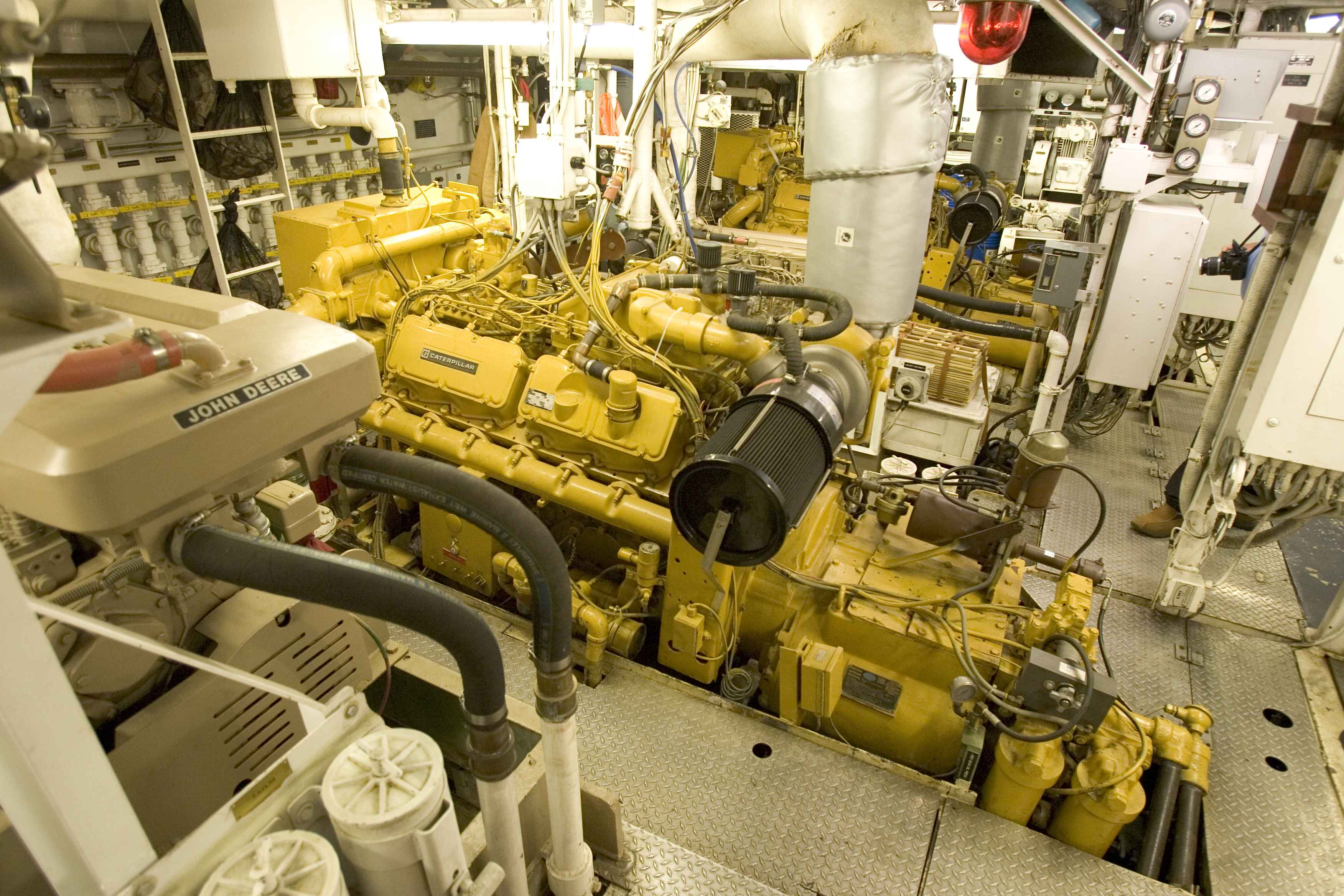
There are plenty of other things that could keep you awake at night on a cruise ship. All the machinery in the engine rooms is monitored in the Engine Control Room (ECR). The ECR is a room full of screens, lights, alarms, and switches from where the current operational status of every piece of equipment can be checked. When the sound wave reaches the sea floor, it gets reflected and then returns to the receiver of the log. Due to the movement of the ship relative to the seabed, a Doppler effect occurs and is evaluated by the device. As long as the sound waves can reach the bottom of the sea and return to the receiver, the Doppler log measures the distance travelled over ground.
Engine room visits are subject to the policies and regulations set forth by each cruise line. Additionally, sailing regulations and guidelines established by the International Maritime Organization (IMO) play a significant role in shaping the accessibility of the engine room. These regulations aim to maintain the safety and security of passengers and crew members, while allowing for controlled visits to the engine room when deemed appropriate. Safety is of utmost importance on any cruise ship, and the engine room is no exception. As the heartbeat of the vessel, the engine room is a highly controlled environment that requires strict adherence to safety measures. With high temperatures, noise levels, restricted zones, and complex equipment, it’s essential to understand the precautions in place for those wishing to visit this vital area of the ship.
In case the back-up generators fail, cruise ships are also equipped with a back-up battery that allows some of these functions to continue running for short periods of time. When ships are docked and not moving, main engines and generators produce far more power than needed. In port, they are turned off, and smaller generators are used to supply the "hotel" load (i.e., lights, air conditioning, the galleys, etc.). Moving the ship through the water takes up the vast majority of a ship's need for power -- somewhere in the vicinity of 85 percent of the power a diesel electric plant produces goes to the propeller. The rest goes toward keeping the lights on and the passengers and crew comfortable. Using LNG to power large cruise ships is a relatively new (2016) concept.
Beneath the Surface: Exploring the Cruise Ship Hull
Hundreds of miles of cables carry power from the generators to switchboards and eventually through passageways, cabins and public rooms. Because the engines are usually turning a crankshaft at a very high rate of speed (often hundreds or thousands of revolutions per minute), the engine is connected to the propellers through gears. Propellers are designed to turn much more slowly -- usually 250 revolutions per minute or less. The gearing allows the engine to turn at its faster, more efficient speed, while allowing propellers to turn at their slower, and also more efficient, speed. Engines rely on fuel and ignition and can help generate electricity.
Each fuel option is based on vessel type and age, routes/itineraries and powerplant. World's largest seaports plus numerous smaller ports already have installed shoreside power capabilities providing shore-to-ship power supply to berthed vessels. In many ports, shorepower is in addition to LNG bunkering capabilities. For those who may not be able to visit the engine room due to safety restrictions or personal preferences, cruise ships offer a wide range of alternative activities. One popular option is to embark on a bridge tour, where passengers can explore the navigation center and interact with the ship’s officers. These tours provide insights into the fascinating world of ship navigation and allow passengers to observe the magnificent views from the bridge.
The largest ships, like the Oasis class from Royal Caribbean, contain six engines. Other ships – like the Carnival Splendor of Carnival Cruise Line – may only be just four, depending on the size of the ship, its age, and the cruise line. On newer cruise ships, engine rooms are found on the aft of the ship and on the lower decks. Despite their advantages, gas propulsion is not widely used in the cruise industry.
The recovered heat is used for numerous services, including desalination of saltwater to fresh water and fuel heating (if heavy fuel oil is used). Fresh water can be produced by reverse osmosis to supplement an evaporator. In the past, cruise ships kept their engines running while docked to generate electricity for shipwide services.
Be sure you know where your life jacket is in your cabin in the event you should ever require one. In the event of an emergency, guests can be proactive by paying attention to the mandatory safety exercise. The number of engines range from five to six, and the power rating for each one is between 9-15 megawatts. Signup today and get maritime ebooks submitted to your inbox directly. It is helmed by the Chief Electrical Engineer, who is sub-ordinated by the First electrician, Electronics engineer, 2nd electricians and assistant electricians. The First Engineer heads the main plant team and is the overall in-charge of engine-room machinery.
Cruise ship engine technology has evolved from wind and sails to newer liquified natural gas technology. Of course, all these tours and products keep you at arm's length from the real life below deck. If you want to let your imagination run riot about what's happening around you while you're settled in your deck chair, bring some tell-all tales about crew life on board. It's quite easy to get a gig if you have a popular field of expertise and some speaking experience, although you won't have complete say over which cruises might want to book you. If the ships that want you aren't cruising locally, you will need to factor in the price of airfares. On other lines, it's offered as part of a Chef's Table experience, which can be booked through the specialty dining reservation desk.




No comments:
Post a Comment